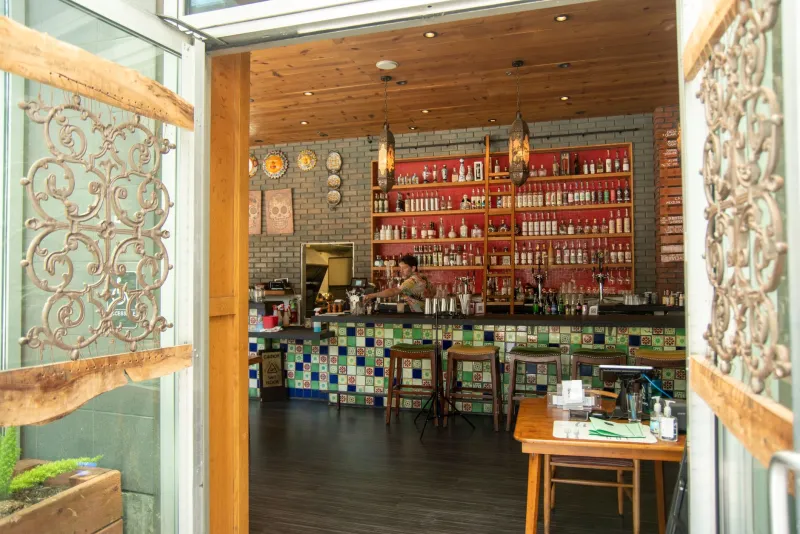
White Aprons, No Tablecloths: The SF Chefs Trading Stars for Stools

Photo by Photo by Peter Muniz on Unsplash on Unsplash
There's a particular kind of exhaustion that comes with running a fine dining kitchen. The 14-hour days, the tasting menus that take weeks to develop, the constant pressure to justify a $300 price tag with every single plate. For a growing number of classically trained chefs in San Francisco, that exhaustion hit a tipping point — and the response has been something nobody in culinary school quite prepared them for: simplicity.
Across the city, from the Mission to the Outer Sunset, chefs with serious French pedigrees are opening counter spots, sandwich windows, and casual neighborhood eateries that would have been unthinkable career moves a decade ago. And the food? It's often better than anything you'd find under a chandelier.
The Training Never Leaves
Here's the thing about classical French training — it doesn't disappear when you stop plating microgreens with tweezers. The foundations of French technique are baked into how these chefs think about food: emulsions, reductions, proper knife work, the obsessive respect for mise en place. When that knowledge gets applied to a banh mi-adjacent bánh mì or a croque monsieur served on a paper tray, the results are quietly extraordinary.
Chefs who've made the leap often describe the same revelation: the constraints of a casual format don't dumb down the cooking. They sharpen it. When you only have one or two components on a plate, every single element has to be flawless. A perfect beurre blanc on a fish taco is more technically demanding than a mediocre one buried under a composed fine dining dish.
SF's food culture has always had a healthy irreverence toward pretension, and that spirit is giving these chefs permission to experiment in ways that a Michelin-starred dining room simply doesn't allow. Nobody expects a $14 lunch counter sandwich to follow the rules — which means the chef can break all of them.
Why Now?
The pandemic reshuffled everything. Fine dining's already-fragile economics became genuinely untenable for many operators, and the labor dynamics that sustained those restaurants shifted dramatically. But the timing also coincided with a broader cultural conversation about who fine dining actually serves — and who gets left out.
San Francisco, a city that's simultaneously one of the most expensive places to eat and one of the most food-literate in the country, has been particularly receptive to this tension. Diners here have long been comfortable eating exceptional food in casual settings. The Ferry Building farmers market, the Mission's taqueria culture, the Richmond District's dim sum spots — SF has never needed a white tablecloth to signal quality. Chefs are finally catching up to what their customers already knew.
There's also a generational shift at play. Younger cooks entering the industry aren't necessarily chasing Michelin stars the way their predecessors did. They want ownership, sustainability, and a life outside the kitchen. A well-run counter spot can offer all three in ways that a 50-seat tasting menu restaurant rarely can.
French Technique Meets SF Irreverence
What makes this trend particularly interesting in San Francisco is the collision of culinary DNA. French cooking is, at its core, a cuisine of precision and respect for process. SF's food culture is improvisational, multicultural, and deeply influenced by the Pacific Rim, Latin America, and the Bay Area's own agricultural bounty.
The results of that collision are genuinely exciting. Think duck confit folded into a Mission-style burrito — the low-and-slow French technique producing impossibly tender meat, wrapped in a flour tortilla and served with crema and pickled jalapeños. Or a classic French onion soup reimagined as a bowl of ramen, with dashi-enriched beef broth and a gruyère-topped chashu pork float. These aren't gimmicks. They're what happens when a chef stops performing fine dining and starts cooking for the city they actually live in.
The sourcing philosophy often stays intact, too. Chefs who built relationships with Sonoma farms and Bay Area foragers during their fine dining years don't abandon those connections when they open a sandwich counter. The ingredients stay exceptional even when the format gets casual — which is precisely why the food hits differently than your average lunch spot.
What Diners Are Actually Responding To
There's something almost therapeutic about watching a highly trained chef just... make you lunch. No amuse-bouche, no sommelier hovering, no pressure to stretch a meal across three hours. You order at a counter, grab a stool, and eat something technically impeccable while listening to whatever's on the playlist.
San Francisco diners have responded to this format with genuine enthusiasm. Spots that might have been overlooked as "just a lunch place" are developing the kind of loyal followings that fine dining restaurants spend years trying to cultivate. The lines form early. The regulars know the chef by name. There's a communal energy that white-tablecloth dining, for all its elegance, often struggles to replicate.
Fine dining isn't going away — SF still has its share of destination restaurants that justify every dollar. But the most interesting cooking in the city right now might be happening at a counter with eight stools and a chalkboard menu that changes with whatever came in from the farm that morning.
That's a very San Francisco story. And it tastes incredible.