Why SF's French-Inspired Cafés Have Quietly Become the City's Favorite Living Rooms
Somewhere around 8:15 on a Tuesday morning, a regular walks into a French-inspired café in Hayes Valley, and the person behind the counter has already started making her order. She didn't ask for it. She didn't need to. It's just Tuesday.
That small exchange — wordless, efficient, warm — is the whole thesis of what's been quietly happening across San Francisco's French café scene. These spots have become something more than restaurants. They've become routines. And in a city that can feel transient and disconnected at times, that matters more than people might expect.
The Third Place San Francisco Actually Needed
Urban sociologists have a term for it: the third place. Not home, not work — the in-between space where community forms organically. Barbershops, bookstores, corner bars. The concept is old, but the need is very much alive. And in San Francisco's current landscape, French-inspired cafés have quietly stepped into that role with a kind of effortless consistency that's genuinely worth examining.
Part of it is the format. The French café model — counter service or light table service, menus that bridge breakfast and lunch without making a big deal of it, spaces designed for lingering — slots neatly into the rhythms of city life. You can come in for a quick café au lait and a croissant at 8 a.m. and be out in ten minutes. Or you can settle in with a tartine and your laptop and stay until noon. Nobody's rushing you. Nobody's checking back every six minutes to see if you want dessert.
That flexibility, it turns out, is deeply French in spirit — and deeply needed in American urban dining culture.
How European Café Culture Translated (and Transformed)
The Parisian café has a specific mythology attached to it: Hemingway, cigarette smoke, philosophy and gossip exchanged over tiny cups of espresso. The reality is both more mundane and more beautiful than the mythology. French cafés work because they're woven into daily infrastructure. They're not destinations — they're habits.
SF's French-inspired café owners have understood this intuitively, even if they don't always frame it that way. The goal was never to replicate the Left Bank. It was to create something that functions the same way here — a place with enough character to be worth returning to, and enough ease to make returning feel natural.
At a spot like Café Lumière in the Inner Sunset, regulars describe something that sounds less like a restaurant relationship and more like a neighborhood friendship. The staff knows names. The playlist shifts depending on who's working. The seasonal quiche changes, but the vibe doesn't. That consistency — not of menu, but of feeling — is exactly what makes a place a community anchor.
The Lunch Break Effect
If mornings belong to the solo regulars and the remote workers, midday is when SF's French cafés really come alive as social spaces. The lunch crowd at these spots has a different energy than you'd find at a fast-casual chain or even a more formal sit-down restaurant. There's an ease to it — people pulling chairs close, splitting a salade niçoise, catching up over a glass of wine at 12:30 on a Wednesday without anyone batting an eye.
That last part is more culturally significant than it sounds. The French approach to the midday meal — that it's a real meal, taken at a real pace, with real conversation — runs counter to the grab-and-go American lunch tradition. And yet in San Francisco, where the work culture has always been a little more fluid and the food culture a little more adventurous, it's found a genuinely receptive audience.
Chef and owner Théo Marchetti, who opened his café-bistro in Noe Valley three years ago, noticed the shift pretty quickly. "In the first few months, people would come in at lunch looking a little uncertain, like they weren't sure if they were allowed to slow down. Now, the lunch regulars are some of our most loyal people. They come back because it's the part of their day that feels human."
What Sets the French Model Apart
It's worth asking why French-inspired cafés specifically have filled this niche, rather than, say, Italian or Japanese casual dining spots — both of which have strong SF presences and devoted followings.
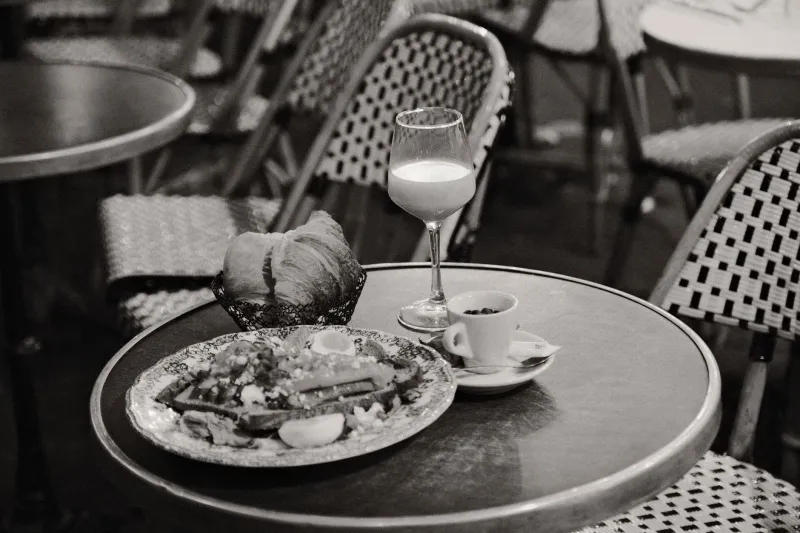
Part of the answer is aesthetic. The visual language of the French café — the marble counters, the handwritten chalkboards, the wicker chairs if there's sidewalk space — communicates "stay a while" in a way that's culturally legible to a broad American audience. It's familiar without being generic.
But the deeper reason might be philosophical. French café culture doesn't really have a to-go mentality built into it. Even the quick espresso at the bar is a pause, not a pit stop. That resistance to the grab-and-go impulse creates a different kind of space — one where the act of stopping is built into the design.
In a city that often feels like it's moving at maximum velocity, that's not nothing.
The Regulars Are the Point
Ask any owner or manager at SF's best-loved French cafés what they're most proud of, and they'll almost always mention the regulars before they mention the food. The retired teacher who comes in every morning and reads the paper. The group of friends who've been doing Friday lunch together for two years. The couple who got engaged at the corner table and still come back on anniversaries.
These stories aren't marketing. They're evidence of something working the way it's supposed to. Food is the reason people walk in the first time. Community is the reason they keep coming back.
San Francisco has always been a city that values authenticity — in its food, its neighborhoods, its people. The French café, transplanted and adapted and made genuinely local, has figured out how to deliver something that feels real. And in a dining landscape full of concepts and pop-ups and limited-run experiences, real is a pretty compelling offer.