Tails, Tongues, and Trotters: How SF's French-Inspired Restaurants Are Making Offal Worth Ordering
Let's be honest about something upfront: the word "offal" does not sell itself. Neither does "organ meat," "variety cuts," or the various other euphemisms the food world has tried over the years. And yet, at a handful of San Francisco's most respected French-inspired kitchens, the dishes getting the most attention from chefs — and increasingly from diners — are the ones built around exactly these ingredients.
This isn't a trend driven by shock value or chef ego. It's something older and more practical than that, rooted in the French tradition of using an animal completely and cooking the less glamorous parts with as much care and skill as the prime cuts. In a city that cares deeply about food waste, sustainability, and culinary craft, it turns out nose-to-tail cooking lands pretty naturally.
What "Nose-to-Tail" Actually Means in Practice
The phrase gets thrown around a lot, but it's worth being specific. Nose-to-tail cooking means using the whole animal — not just the tenderloin and the rack, but the liver, kidneys, heart, tongue, cheeks, trotters, tripe, sweetbreads, and marrow. It's the philosophy that every part of an animal that was raised and slaughtered for food deserves to be cooked and eaten with intention.
In French culinary tradition, this isn't radical. It's historical. Dishes like rognons de veau (veal kidneys), ris de veau (sweetbreads), tête de veau (calf's head), and pieds de porc (pig's trotters) have been on bistro menus in France for centuries. These weren't poor-people food or adventurous-eater food — they were just food, prepared by cooks who understood that the secondary cuts often had more flavor and more character than the expensive ones.
The disconnect happened somewhere in the American mid-century, when convenience culture and supermarket uniformity narrowed what most people considered edible. What SF's French-inspired kitchens are doing now is, in a sense, just catching up with what Lyon never stopped doing.
The Chefs Making the Case
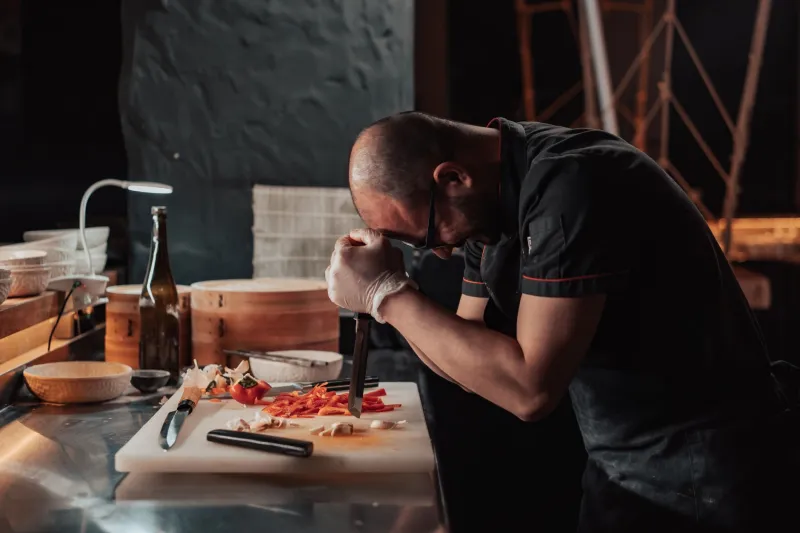
Chef Pascal Fontaine runs a small kitchen in the Outer Sunset that seats maybe thirty people on a good night. His menu changes weekly, and he has a rule: at least two dishes must feature what he calls "the forgotten cuts." Last month that meant beef heart tartare and a terrine built around braised pig ears. This month it's veal kidney with a grain mustard cream and lamb tongue dressed simply with capers and parsley.
"The kidneys are the hardest sell," he admits. "People hear the word and they think they know what it tastes like. They don't." A properly prepared veal kidney — cleaned well, cooked fast over high heat, rested — has an intensity and richness that's completely its own. It's not gamey in the way people fear. It's deeply savory in a way that's hard to describe until you've tried it.
Fontaine spends time with tables who seem curious but hesitant. He's learned that the best approach isn't to oversell or over-explain. He just sends out a small taste. "Once someone has actually eaten it, the conversation changes completely."
At a Noe Valley spot known for its rotating charcuterie program, the chef has built an entire section of the menu around braised and slow-cooked secondary cuts. Beef cheeks braised in red wine. Pork belly pressed and seared. Lamb neck slow-cooked until it falls apart. These aren't technically offal — they're muscle meat — but they represent the same philosophy: the parts that require more time and technique tend to reward the effort.
Why Sustainability Makes This Argument Easier
Five years ago, a chef trying to put tripe on a menu in San Francisco might have had a harder time making the case. Today, the sustainability angle genuinely resonates with Bay Area diners in a way that changes the conversation.
If you're going to eat meat, the argument goes, it's more honest to eat the whole animal. The environmental cost of raising a cow doesn't change based on which part of it you eat. Buying only the premium cuts and discarding the rest — or relegating it to pet food and industrial processing — is a kind of selective ethics that doesn't hold up well under scrutiny.
Chefs making this argument aren't being preachy about it. They're mostly just pointing out that the kidneys from a well-raised, pasture-grazed animal are as worth cooking carefully as the ribeye. The animal earned that respect across its entire body, not just the parts that photograph well.
Several SF restaurants are working directly with small Northern California ranchers who specifically appreciate the whole-animal commitment. When a kitchen commits to buying and using everything, it changes the economics for small producers in ways that matter.
A Beginner's Guide to Ordering These Dishes
If you're curious but not yet committed, here's a loose hierarchy of approachability for the cuts you're likely to find on SF's French-inspired menus right now.
Start here: Beef cheeks, pork cheeks, lamb neck, marrow bones. These are the gateway cuts — deeply flavored, familiar in texture, easy to love. If you've had a really good braise, you've essentially had this.
Take the next step: Sweetbreads (ris de veau or ris d'agneau). These are the thymus glands of veal or lamb, and they're genuinely mild, rich, and a little crispy when done right. They're one of the most popular offal dishes for a reason. Order them if you see them.
When you're feeling confident: Beef tongue, veal kidney, chicken livers done properly (not pâté, but sautéed with shallots and something acidic). Each of these has a distinct character. None of them are as challenging as the names suggest.
For the curious and committed: Tripe, pig trotters, calf's head preparations. These are the dishes where technique really shows. A great tripe preparation is a revelation. A mediocre one is exactly what you feared. Trust the kitchen's reputation before ordering these.
The general rule: if a dish has been on a menu for a long time, the kitchen has figured it out. Ask your server what the regulars order.
The Bigger Shift Happening Here
What's interesting about this moment in SF's food scene isn't just that offal is appearing on menus — it's that it's appearing without apology and without the ironic framing that sometimes accompanied it in the past. These dishes aren't being presented as daring or transgressive. They're being presented as good food with a history and a logic behind them.
That's a more mature conversation than the one that was happening ten years ago, and it reflects something real about where SF diners are right now. There's less performance involved in adventurous eating, and more genuine curiosity. People want to understand what they're eating and why it matters, not just to prove something to themselves.
French culinary tradition, with its long history of treating every cut as worthy of serious cooking, turns out to be a pretty useful guide for that shift. The bistros of Lyon figured this out a long time ago. SF is just catching up — and making it its own in the process.