Cut, Aged, and Converted: Meet the SF Fromagers Changing How Americans Think About Cheese
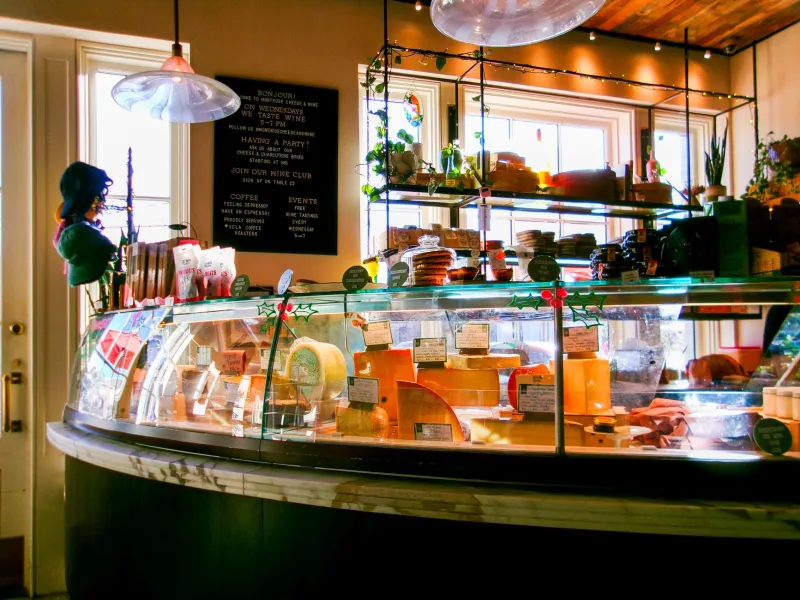
There's a moment that happens at a good cheese counter — the kind where someone slides a sliver of something funky and unfamiliar across the board and says, just try it. For a lot of San Franciscans, that moment has changed everything. Not just what they buy, but how they eat, how they entertain, and honestly, how they think about food altogether.
San Francisco has always punched above its weight when it comes to culinary sophistication. But even here, the cheese conversation used to be pretty predictable: Brie, Camembert, maybe a wedge of Comté if you were feeling adventurous. What's happening now at a handful of French-influenced shops across the city is something different — a genuine education in the full, gloriously weird, deeply regional world of French cheese, with a California twist that makes it feel entirely at home.
More Than a Counter, Less Than a Classroom
The best fromagers in SF will tell you they're not trying to lecture anyone. But spend twenty minutes at one of these counters and you'll walk away knowing more than you expected. That's intentional.
Many of the city's most respected cheese professionals trained in France — or worked under mentors who did — and they brought back something beyond technique. They brought back a philosophy: that cheese is a living thing, that where it comes from matters, and that the right piece at the right moment of its life is a completely different experience than the same cheese a week too early or too late.
That obsession with timing shows up in how they stock their cases. Rather than rotating in whatever's available from a distributor, these shops track specific wheels, monitor humidity and temperature with near-religious attention, and sometimes hold back a cheese for weeks until they believe it's ready to sell. It's a level of care that's pretty rare in American retail — and it shows in the product.
Going Beyond the Obvious
Ask any serious SF fromager what they wish more customers would try, and you'll get a list that goes well beyond the greatest hits. Époisses, sure — but what about Langres, the little crater-shaped beauty from Champagne that you're technically supposed to fill with a splash of bubbly? Or Salers, the raw-milk wheel from the Auvergne that only gets made while the cows are grazing on summer pasture?
These aren't obscure for obscurity's sake. Each one tells a story about a specific place, a specific season, a specific way of life. And that's exactly the pitch these mongers are making to their customers: that choosing a cheese based on region and season — the way the French actually do it — opens up a whole new world.
Some shops have started organizing their selections by region rather than by milk type or texture, which forces customers to think geographically. It's a small shift, but it changes the whole conversation. Suddenly you're not just picking something to go with crackers — you're thinking about whether you want something from Normandy or the Basque Country, from the Alps or the Loire Valley.
California in the Mix
Here's where things get interesting for SF specifically: the city's French-trained fromagers aren't just importing French tradition — they're applying it to what's being made right here in Northern California.
The Bay Area and its surrounding counties have become one of the most exciting dairy regions in the country. Small-scale creameries in Marin, Sonoma, and the Sierra Nevada foothills are producing cheeses that wouldn't look out of place on a Parisian board. And the fromagers who really know their stuff are the ones bridging those two worlds — pairing a raw-milk tomme from a Petaluma farm alongside a genuine French mountain cheese and letting customers taste the conversation between them.
It's a move that feels very San Francisco: globally informed, locally rooted, and genuinely curious about where the two meet. Some shops have even started working directly with California cheesemakers to age wheels in-house, using techniques borrowed from French affineurs. The result is something you genuinely can't find anywhere else.
How to Actually Taste Cheese (According to the People Who Know)
One of the most useful things these mongers do — and they'll often do it unprompted if you look even slightly curious — is teach you how to taste. Not in a pretentious way. More like: here's what to pay attention to, here's what you're actually experiencing, here's why that matters.
A few things they'll tell you: temperature is everything. Cheese straight from the fridge is a muted, closed-off version of itself. Give it thirty to forty-five minutes at room temperature and it wakes up completely. The flavors open, the texture shifts, the smell becomes part of the experience rather than a warning sign.
They'll also tell you to eat it plain first — no cracker, no honey, no fig jam — before you start pairing. You can't know what a cheese needs until you know what it is. And they'll almost certainly tell you to slow down, which is maybe the most French advice of all.
A Different Kind of Wine Shop Moment
For a long time, the wine shop was the place in SF where you could get that kind of one-on-one expertise, where someone would actually talk you through what you were buying. The cheese counter is starting to occupy the same cultural space.
People are coming in not just to grab something for a dinner party, but to learn. To ask questions. To taste something weird on a Tuesday afternoon and leave with a new obsession. The fromagers who are doing this well have built real communities around their counters — regulars who come back not just for the cheese but for the conversation.
That's a distinctly French idea, actually: the shop as a place of relationship, not just transaction. And it translates beautifully to San Francisco, a city that has always had a soft spot for the kind of neighborhood merchant who actually knows your name and what you like.
Worth the Hunt
If you haven't spent serious time at a dedicated cheese shop lately — not the supermarket cheese section, but an actual fromagerie — it's worth going out of your way. Go without a plan. Tell them what you're cooking or drinking, or don't, and just ask what they're excited about right now. Let them cut you a taste of something you've never heard of.
Chances are you'll leave with something you didn't expect, a little more knowledge than you came in with, and a very strong opinion about whether Langres is better with Champagne or Chablis. Welcome to the obsession.