Fat, Heat, and a Little Faith: What SF Chefs Really Think About Butter Sauces
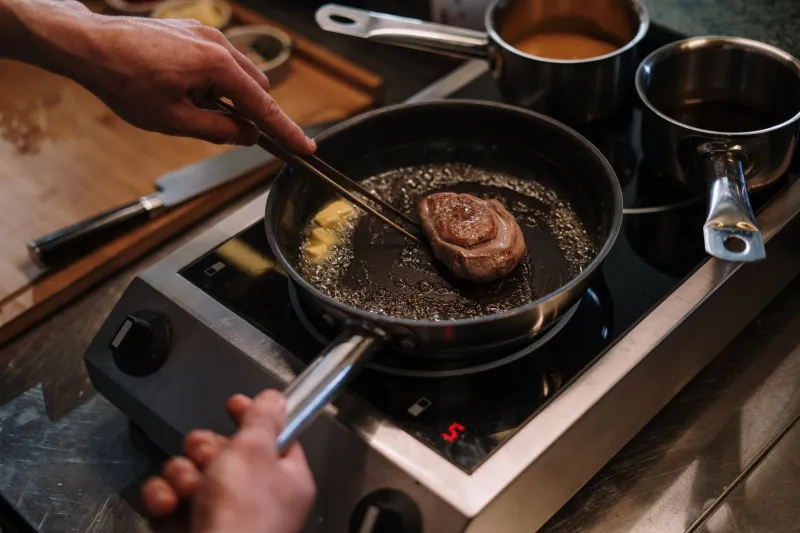
There's a moment in every home cook's life when they attempt a beurre blanc and watch it split. The butter separates, the pan looks like a sad puddle of grease, and the whole thing goes into the sink with a quiet kind of defeat. It's a rite of passage, apparently — and according to the chefs working out of San Francisco's French-inspired kitchens, it's also completely preventable.
The trick, they'll tell you, isn't magic hands or years of culinary school. It's understanding what the sauce is actually trying to do.
What's Going On in That Pan
Beurre blanc — literally "white butter" — is a classical French emulsified sauce built on a reduction of white wine and vinegar, finished with cold butter whisked in gradually over low heat. Simple on paper. Humbling in practice.
The science is actually pretty elegant. Butter is roughly 80% fat, 16-18% water, and a small percentage of milk solids. When you whisk cold butter into a warm acidic reduction, you're coaxing those components into a temporary suspension — an emulsion — where fat droplets stay dispersed in a water-based liquid rather than pooling on top. The milk proteins and lecithin in the butter act as natural emulsifiers, helping hold everything together.
Temperature is the make-or-break variable. Too hot and the fat melts out completely, breaking the emulsion. Too cool and the butter won't incorporate smoothly. You're aiming for a narrow window — somewhere around 160 to 180°F — where the butter softens gradually rather than melting all at once.
"Most people think they broke the sauce because they did something wrong," says one chef at a Hayes Valley bistro who asked to remain anonymous because, as he put it, "I don't want to be the person who made butter sauce a whole thing." "But usually they just got impatient or turned up the heat. The sauce wasn't failing them — they stopped listening to it."
Why SF Kitchens Are Rethinking the Classics
San Francisco has always had a complicated relationship with French technique. The city's food culture leans hard into local sourcing, seasonal flexibility, and an inherent suspicion of anything that feels like gatekeeping. Classical French cooking, with its rigid hierarchies and centuries of accumulated doctrine, can feel at odds with that ethos.
But what's been quietly happening in SF's French-inspired restaurants isn't a rejection of technique — it's a reframing of it. Rather than treating classical methods as sacred rules, chefs here tend to treat them as starting points for understanding. The question isn't what does the recipe say but why does this work, and what happens if I change it.
That shift in thinking matters enormously when you're dealing with emulsion-based sauces. A hollandaise, a beurre blanc, a pan sauce finished with cold butter — these aren't arbitrary steps in a recipe. They're applications of specific physical and chemical principles. Once you understand those principles, the sauce stops being mysterious.
"French cooking has this reputation for being pretentious," says a sous chef at a Tenderloin wine bar known for its rotating sauce program. "But the actual techniques are incredibly logical. Beurre blanc isn't hard because it's French. It's hard because people don't know what emulsification means, and nobody ever bothered to explain it."
The Mistakes That Actually Matter
Ask any SF chef about common beurre blanc errors and you'll hear the same handful of answers, delivered with the weary patience of someone who has fixed a lot of broken sauces.
Starting with warm butter. Cold butter is non-negotiable. The gradual temperature differential between the cold fat and the warm reduction is what allows the emulsion to build incrementally. Room-temperature butter melts too fast, flooding the liquid with fat before the emulsifiers have a chance to do their job.
Reducing the base too aggressively. Your wine-and-vinegar reduction should be syrupy but not bone dry. If you cook it down too far, there isn't enough liquid to suspend the fat droplets, and the whole structure collapses. A tablespoon or two of reduction is usually enough — it sounds like almost nothing, but it's doing a lot of work.
Walking away. Beurre blanc requires your full attention for about five minutes. That's it. But those five minutes demand constant, gentle whisking and active heat management. This is not a sauce you can leave on the back burner while you plate everything else.
Forgetting the cream option. This one's a bit of a culinary debate, but many SF chefs add a small splash of heavy cream to the reduction before incorporating the butter. Cream contains additional emulsifying proteins that give the sauce more stability and a slightly wider temperature tolerance. Traditionalists will argue it changes the flavor. Pragmatists will point out that it makes the sauce significantly harder to break. In a busy restaurant kitchen, that's not a trivial consideration.
The Acid Is Doing More Than You Think
One underappreciated element of beurre blanc is the role the acidic reduction plays beyond flavor. The acidity lowers the pH of the base liquid, which affects how the butter proteins behave during emulsification. A more acidic environment helps keep the milk proteins active as emulsifiers rather than clumping together — which is part of why the sauce holds better than, say, just whisking butter into plain water.
This is also why the choice of acid matters. Traditional recipes call for dry white wine and white wine vinegar, often with a shallot. But SF chefs have been experimenting with everything from Champagne vinegar to verjuice to citrus reductions. Each brings a slightly different acidity level and flavor profile, which in turn affects both the taste and the structural behavior of the finished sauce.
"Once you understand that the acid is functional, not just there for flavor, you start thinking about it differently," says a chef instructor who runs occasional technique workshops out of a Mission District cooking studio. "You're not just following a recipe anymore. You're making decisions."
Making It Your Own Without Breaking It
The reason SF kitchens are so drawn to this kind of approach — technique as understanding rather than technique as rule-following — is that it opens up creative flexibility without sacrificing the result. A chef who knows why beurre blanc works can swap in brown butter for a nuttier profile, or build the base with fish stock instead of wine for a more savory application, or finish with a drizzle of good California olive oil to lighten the richness.
For home cooks, the takeaway is simpler: slow down, keep the heat low, and stay curious. The sauce isn't trying to punish you. It's just asking you to pay attention.
And if it breaks? Add a small splash of cold water and whisk vigorously. You might be surprised how often it comes back together.