Stars Are Overrated: The SF French Dining Scene Thriving Without Michelin's Blessing
There's a certain kind of restaurant in San Francisco that doesn't show up in the Michelin Guide. No red cover, no star, no mention in the annual announcement that sends the city's food media into a predictable frenzy. And yet, if you ask the people who eat out constantly — the regulars, the critics who pay out of pocket, the line cooks on their nights off — these are often the places they'd point you toward first.
Something is shifting in how this city thinks about culinary excellence. And nowhere is that more visible than in the French-inspired dining scene, where a quietly rebellious group of chefs and restaurateurs are building something genuinely compelling without any help from a tire company.
What the Guide Gets Right (and What It Misses)
Let's be fair: Michelin has done a lot for elevating food culture in America. When the guide expanded to San Francisco in 2006, it gave serious, technique-driven cooking a kind of institutional legitimacy it hadn't fully had before. Chefs got recognition. Investors paid attention. Reservations got harder.
But the guide was always better at rewarding a certain type of restaurant — formal, consistent, expensive, built around a particular idea of what fine dining looks like. French cuisine, with its classical structure and long tradition of tasting menus and white tablecloths, fit that mold pretty naturally.
The problem is that French cooking in San Francisco has moved well past that mold. The most interesting stuff happening right now isn't in the dining rooms built for Michelin inspectors. It's in the 35-seat bistro in the Outer Sunset where the chef does a different cassoulet every week based on what showed up from the farms. It's in the wine bar in the Mission where the natural Burgundy list is better than places charging three times as much for dinner. It's in the lunch counter in Hayes Valley where a classically trained cook is quietly serving the best croque monsieur in the city to a line of people who have no idea they're eating something extraordinary.
The Chefs Who Opted Out
Some of this is accidental — restaurants that simply haven't been noticed yet. But a surprising number of SF chefs working in the French tradition have made a deliberate choice to stay off the radar.
"I cooked in starred kitchens for almost a decade," says one chef running a small French-leaning spot in Noe Valley. "I know what goes into chasing that recognition. The consistency requirements, the plating standards, the way the whole dining room has to be calibrated for a very specific kind of guest. That's not the restaurant I wanted to open."
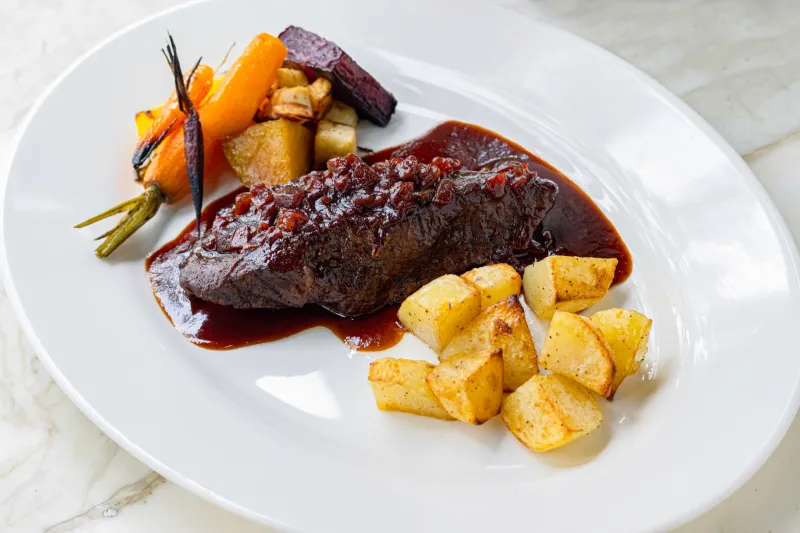
His place seats maybe 40 people, takes walk-ins on weeknights, and runs a menu that changes based on what he's excited about that week. Last month it was a pork belly dish with a mustard cream that leaned heavily on a recipe his French grandmother used to make. The week before, a duck confit that he'd been tweaking for two years finally clicked. None of it is designed for a Michelin inspector. All of it is genuinely, unmistakably delicious.
This sentiment comes up again and again when you talk to chefs in this space. There's a real fatigue with the formal accolade system — not bitterness exactly, but a kind of clarity about what they're actually trying to do and who they're trying to do it for.
What the Critics Are Saying
Food writers who cover San Francisco seriously have been noticing this for a while. The conventional wisdom used to be that a Michelin star was the clearest signal of a restaurant worth your time and money. That's gotten harder to defend.
"The guide rewards a very specific execution of excellence," says one longtime Bay Area food critic. "Precision, repetition, formal service. But some of the most exciting cooking in this city right now is doing the opposite — it's loose, it's seasonal, it's personal. French technique applied to California ingredients in a room where you can actually hear yourself talk. That's not what Michelin is set up to celebrate."
She points to a handful of spots she returns to regularly that have never appeared in the guide. A Tenderloin bistro doing a rotating charcuterie board that she calls the best in the city. A Richmond District café where the chef's version of a simple salade niçoise has made her rethink the dish entirely. Places that are, in her words, "doing more interesting work than half the starred restaurants in town."
The California Factor
Part of what makes this tension so specific to San Francisco is the city's relationship with California produce. French cooking, at its classical core, was built around French ingredients — particular cheeses, particular cuts, particular regional vegetables. When you transplant that tradition to the Bay Area, something interesting happens. The technique stays but the ingredients shift, and the results don't always fit neatly into the categories a French-trained inspector is used to evaluating.
A chef in the Castro put it plainly: "I'm using the same mother sauces I learned in Lyon. But the tomatoes are from Brentwood, the lettuces are from a farm 40 miles away, and the fish came out of Monterey Bay this morning. Is that French food? I don't know. But it's the best version of what I know how to cook."
This kind of hybrid identity — deeply French in method, deeply Californian in ingredient — is exactly what the Michelin Guide has historically struggled to classify. And classification, it turns out, matters a lot to how the guide awards recognition.
Why This Might Actually Be Good News
Here's the thing about the SF restaurants thriving outside the Michelin ecosystem: they're often more accessible, more creative, and more fun to eat at than their starred counterparts. Prices tend to be lower. The atmosphere is less pressurized. Chefs are taking risks they couldn't afford to take if an inspector's visit could make or break their year.
And the dining public seems to be catching on. Reservations at some of these spots are harder to get than at places with actual stars. The word-of-mouth networks — food group chats, neighborhood blogs, the recommendations of trusted regulars — are doing the work that the guide used to do.
"I stopped using Michelin as my primary filter a while ago," admits a regular on the SF dining circuit who eats out four or five times a week. "I use it as one signal among many. And honestly, some of my best meals in this city in the last two years have been at places the guide has never touched."
The Bigger Picture
None of this is a takedown of Michelin. The guide still matters, still moves the needle, still shapes careers. But in San Francisco — a city that has always been a little suspicious of formal hierarchies — the French-inspired dining scene is quietly making the case that culinary excellence doesn't require institutional validation.
The best croissant you've ever had might be in a bakery the guide has never visited. The duck dish that stays with you for weeks might come from a kitchen with no stars, no press mentions, and a reservations system that's just a phone number on a handwritten card taped to the door.
In this city, that's not a consolation prize. That's often the whole point.