Lunch, But Make It French: How SF's Deli Scene Is Quietly Winning the Midday Rush
There's a particular kind of hunger that hits around 12:15 on a Tuesday in San Francisco. You've got maybe 30 minutes, a Slack notification you're already ignoring, and zero interest in another sad desk salad from the place around the corner. You want something that actually tastes like someone cared about it.
That's the gap a handful of French-inspired delis and counter spots across the city have quietly moved into — and they're filling it better than most people realize.
Forget the image of a French lunch as a two-hour affair with a bread basket and a carafe of Côtes du Rhône. What's happening at some of SF's best midday counters is something more interesting: a serious culinary sensibility compressed into a format that works for real city life. The food is fast. The quality isn't.
The Sandwich Problem (And How French Technique Solves It)
Here's the thing about a good French sandwich — it's not trying to be a hero. A jambon-beurre, the Parisian standard of ham and butter on a baguette, wins not through abundance but through precision. The bread has to be right. The butter has to be good. The ham has to be worth eating on its own.
That philosophy translates surprisingly well to a city full of people who grew up eating Mission burritos and know exactly when something's been made with shortcuts.
"People here have a good palate," says one owner of a French-leaning counter spot in Hayes Valley who asked to stay off the record while their second location is still in soft-open mode. "They might not know the name of what they're eating, but they know when the bread is stale or the mustard is cheap. You can't fake it."
What that looks like in practice: housemade cornichon aioli, cultured butter sourced from a small California creamery, and charcuterie sliced that morning rather than pre-packaged two days ago. It's not complicated. It's just deliberate.
Composed Salads That Actually Compose
The composed salad — a very French concept where the components of a dish are arranged intentionally rather than tossed together — has found a natural home in SF's grab-and-go culture. Done right, it solves the biggest problem with takeout salads: by the time you get back to your desk, everything's wilted into a sad, overdressed pile.
When each element is treated separately — lentils dressed with a sharp vinaigrette, haricots verts blanched and cooled, a soft-boiled egg nestled alongside rather than sliced into the mix — the salad holds. It travels. It tastes like it was made for you even if it was assembled an hour ago.
Several spots around SoMa and the Financial District have leaned hard into this format, recognizing that the Bay Area lunch crowd is more than willing to pay a fair price for something that eats like a real meal. Niçoise-inspired builds with local albacore, frisée with lardons and a warm bacon vinaigrette, celeri remoulade tucked alongside roasted beets — these aren't afterthoughts. They're the whole point.
Charcuterie to Go: The Box That Changed the Game
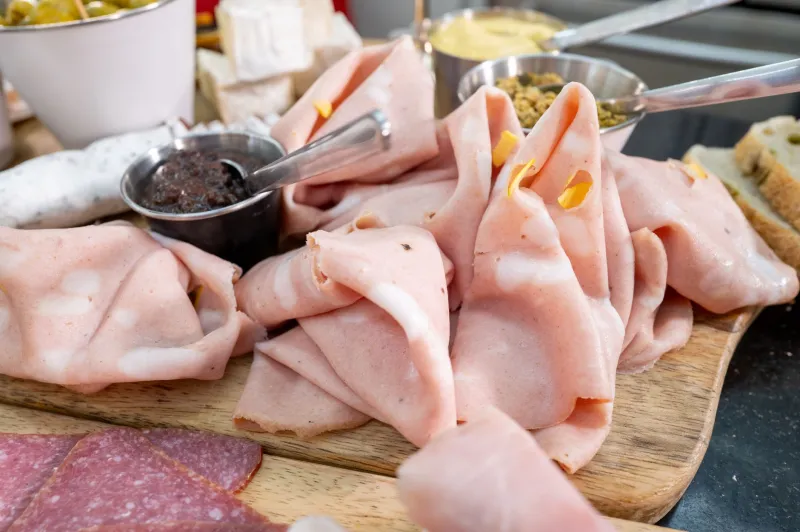
If there's one format that's genuinely surprised people, it's the grab-and-go charcuterie box. A few years ago, a curated spread of pâté, rillettes, mustard, and cornichons felt like something you ordered at a wine bar on a Friday night. Now it's showing up as a legitimate lunch option — and it makes a strange kind of sense.
Charcuterie travels well. It doesn't need to be reheated. And when the components are good — a coarse-ground country pâté, a duck rillette with just the right amount of fat, a few slices of saucisson sec — it's one of the most satisfying midday meals you can have without a fork.
"We started offering a small box almost as a joke," admits the chef behind a Tenderloin spot that's become something of a word-of-mouth lunch destination. "We thought maybe we'd sell five a week. Now it's our second most popular item at lunch. People grab it with a glass of something sparkling if they have time, or just eat it at their desk. Either way works."
The key, he says, is not overthinking the format. "It's not a charcuterie board. It's not a platter. It's a box. It's lunch. We just make sure everything in it is worth eating."
The Speed Problem: Keeping Standards When the Clock Is Running
Maintaining French culinary standards in a fast-service context isn't without friction. Stocks take time. Properly rested meat takes time. A well-made vinaigrette takes about 90 seconds, but doing it in volume without losing the balance requires attention most fast-food operations simply don't build in.
The chefs who've figured it out tend to rely on mise en place — the French kitchen discipline of having everything prepped and in its place before service begins — as the structural backbone of their lunch operation. The actual assembly is fast because the work happened earlier.
"We spend three hours in the morning so we can spend 90 seconds per order at lunch," explains one chef who runs a small counter in the Castro that does a brisk business in croque monsieurs and leek vinaigrette plates. "That's the trade. The customer doesn't see the prep. They just get the result."
It's a model that requires a different kind of discipline than a traditional restaurant kitchen — less improvisation, more systems — but the payoff is a lunch counter that can move fast without cutting corners.
Where to Start: A Few Spots Worth the Detour
You don't need a reservation or a long lunch break to eat well in this city. A few places worth building your Tuesday around:
- Hayes Valley and the Western Addition have seen a quiet uptick in counter spots doing composed plates and sandwiches built on proper bread. Walk, don't drive.
- SoMa remains fertile ground for the charcuterie box format, with a few spots catering specifically to the tech-adjacent lunch crowd who've gotten wise to eating something real.
- The Mission has long had strong deli energy, and a few newer spots have layered French sensibility onto the neighborhood's existing appetite for serious food at reasonable prices.
- North Beach, with its existing European café culture, is an obvious fit — and a handful of spots there have quietly elevated the midday sandwich into something worth writing home about.
The Bigger Picture
What's happening with SF's French-inspired deli scene isn't really about France. It's about a set of values — care, technique, good ingredients, honest cooking — that happen to have deep roots in French culinary tradition and that translate remarkably well to feeding a busy city at noon.
The lunch counter has always been one of the most democratic formats in food service. You don't need a reservation. You don't need to dress up. You just need to know where to go.
Consider this your starting point.